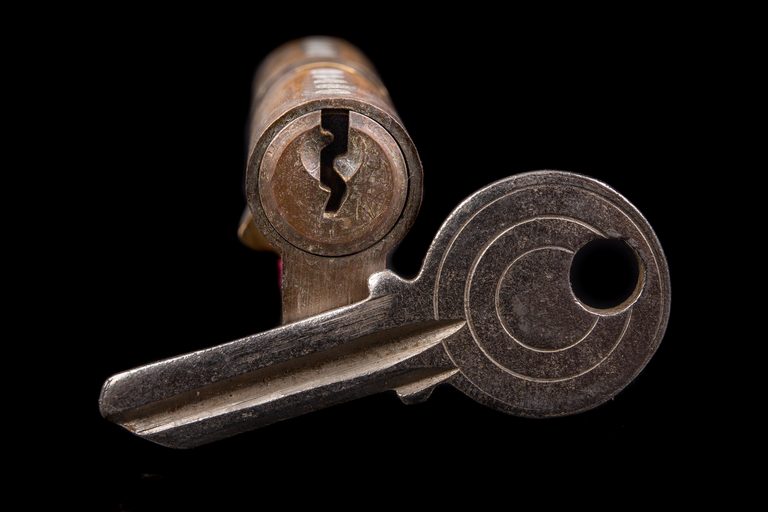
This is one of the most diagnostic symptoms in the trade. Because the key turning proves the cylinder is fine, the fault sits between the cylinder and the latch.
A broken spindle or tailpiece
The cylinder connects to the latch through a flat bar or spindle. When that shears, the key rotates freely and the bolt stays put. Consequently you get exactly this symptom. Furthermore, it is a common failure on older hardware where the part has flexed thousands of times.
The bolt is jammed against the strike
If the door has dropped, the bolt binds inside the strike plate and cannot retract. Consequently pulling the door towards you while turning the key often releases it. Therefore try lifting or pushing the door slightly before assuming anything has broken.
A seized latch
Multipoint and mortise latches seize when dirt or corrosion builds up. Meanwhile spring-loaded components lose tension over time. Consequently the latch stops retracting fully even though everything turns. Additionally, forcing it at this stage usually breaks a plastic component inside.
What we do about it
Diagnosis first, because replacing a cylinder fixes nothing when the spindle failed. Consequently we open the door, identify which component failed, and replace only that. Above all, a working cylinder should not be thrown away because the part behind it broke.
Questions we get about this
Does this mean the lock is broken?
The cylinder is fine. Consequently the fault is between it and the latch.
Can I try anything first?
Pull or lift the door while turning the key. That releases a jammed bolt.
Will you need to replace the whole lock?
Often not. Usually one component has failed.
Can you get me in without damage?
Yes, in almost every case.