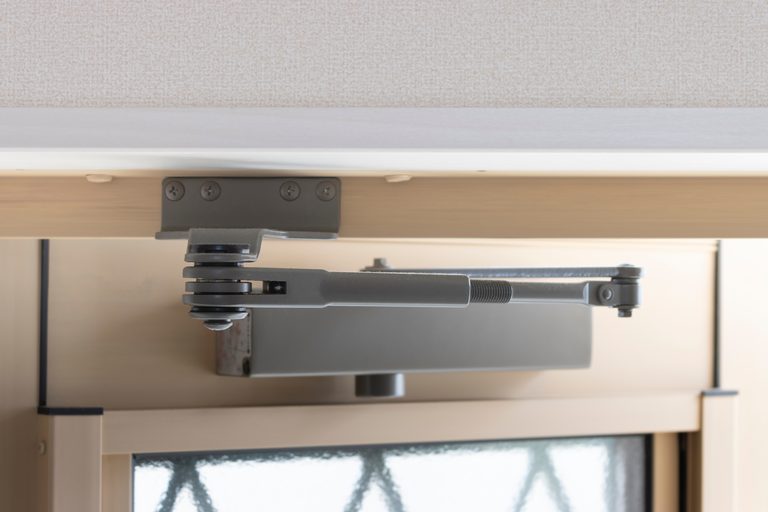
A door closer manages two separate movements, and most complaints trace to one of them being out of adjustment. Consequently replacement is often unnecessary.
Sweep and latch are different settings
Sweep controls the door across most of its arc. Latch speed controls the final few degrees. Consequently a door can close gently and still latch firmly, provided both are set. Therefore a slamming door usually needs latch speed reduced rather than a new closer.
Backcheck stops wall damage
Backcheck resists the door when thrown open hard. Consequently without it, the handle eventually punches the wall. Furthermore, it protects the closer arm itself from being overextended. Therefore setting it correctly extends the life of everything involved.
When it genuinely needs replacing
Oil on the door or the closer body means the seals have failed, and that unit is finished. Consequently no adjustment recovers it. Additionally an undersized closer on a heavy door will never latch reliably, so sizing matters as much as adjustment.
Fire doors are not optional
A fire door only works when closed and latched. Consequently a closer leaving it ajar defeats the purpose entirely. Moreover propping fire doors with wedges is common and unsafe. Therefore if a door is being propped, the answer is a hold-open device linked to the alarm.
Questions we get about this
Can you stop our door slamming?
Yes, usually by adjusting latch speed and backcheck.
The closer is leaking oil.
The seals have failed. Consequently it needs replacing.
Our fire door does not latch.
That is serious, because a fire door only works when latched.
Can we prop it open legally?
Only with a hold-open device linked to the alarm.